
Our Story
Three generations of garment exporters in Karachi, three cities, and one idea worn everywhere at once.
Sambrene comes out of a Karachi garment house — a family that has been cutting, stitching and exporting other people's labels for three generations. Waania grew up in that building: sample rooms, bolt racks, the smell of steam, buyers flying in with tear sheets and flying out with containers. She learned the trade the way you learn a language at home, before you know it has grammar.
What the family exported was always someone else's name. Sambrene is the first time the name on the label is ours.
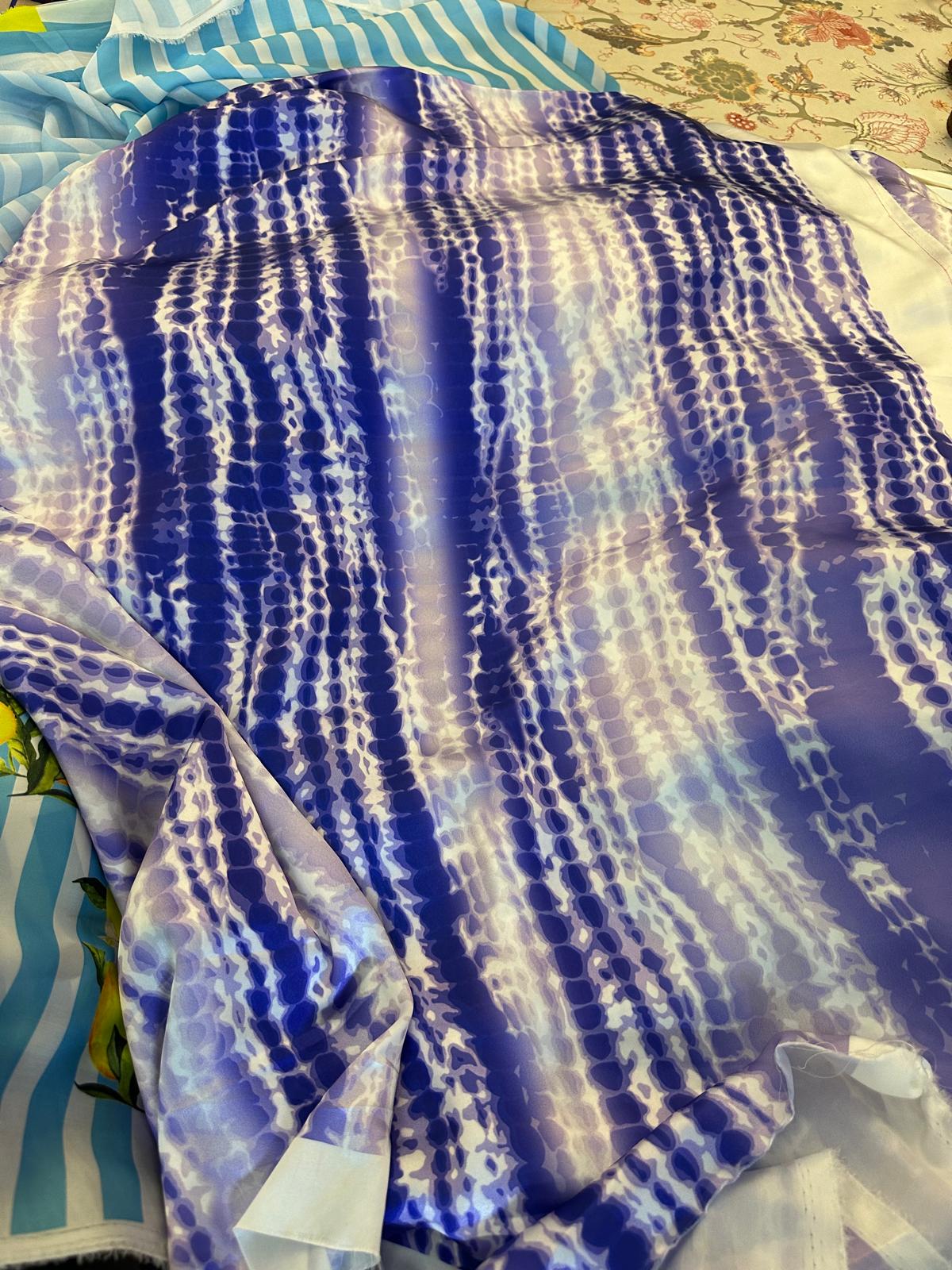
My grandfather shipped other people's labels for forty years. I wanted to ship ours.
Three cities, one silhouette
What Waania kept noticingKarachi
Where the co-ord was never a trend. A matched set for the dawat, for chai by the khirki, for the whole long afternoon — and a workroom that can actually make it.
New York
Where the same idea arrived as "the set" — worn to dinner, to work, to the airport. Downtown had discovered dressing in one gesture, and priced it like a suit.
The Hamptons
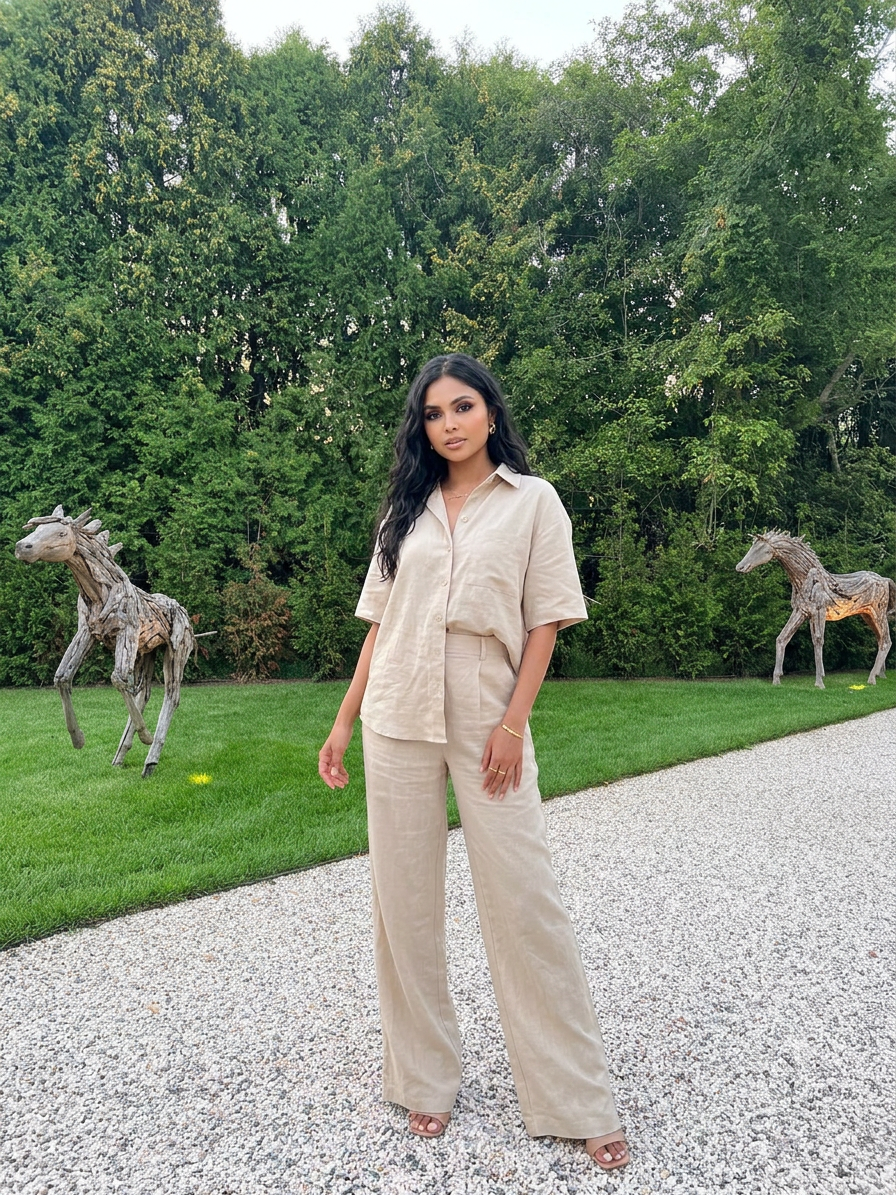
Where it loosened again. Porch, hedge, marina, garden party — cotton and silk, nothing tight, nothing that needs pressing before dinner.
A house, and then a house of houses.
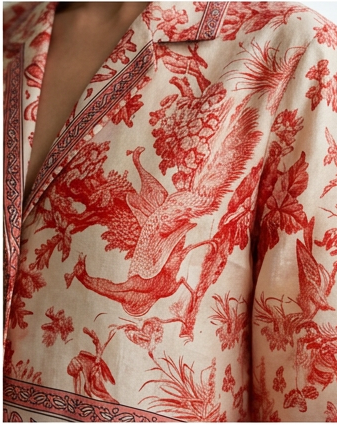
Sambrene is being built as two things at once. The first is our own collection, cut in Karachi around the border of the cloth. The second is a marketplace for co-ords and sets by artisans working out of their own cultural traditions — block printers, weavers, embroiderers, small ateliers — each one chosen by us, named on the label, and never anonymised into "inspired by".
A family that spent three generations shipping other people's labels knows exactly how much a name is worth. Everyone who makes here keeps theirs.